
LoRaWAN for Industrial IoT: How Long-Range, Low-Power Communication Works
Industrial IoT often needs to move a few important bytes across a large site—not stream video or replace a control bus. LoRaWAN is designed for that gap: battery-conscious devices, wide-area radio coverage, compact messages, and gateways that connect distributed field equipment to an application. Its strengths are substantial, but only when the workload matches the network.
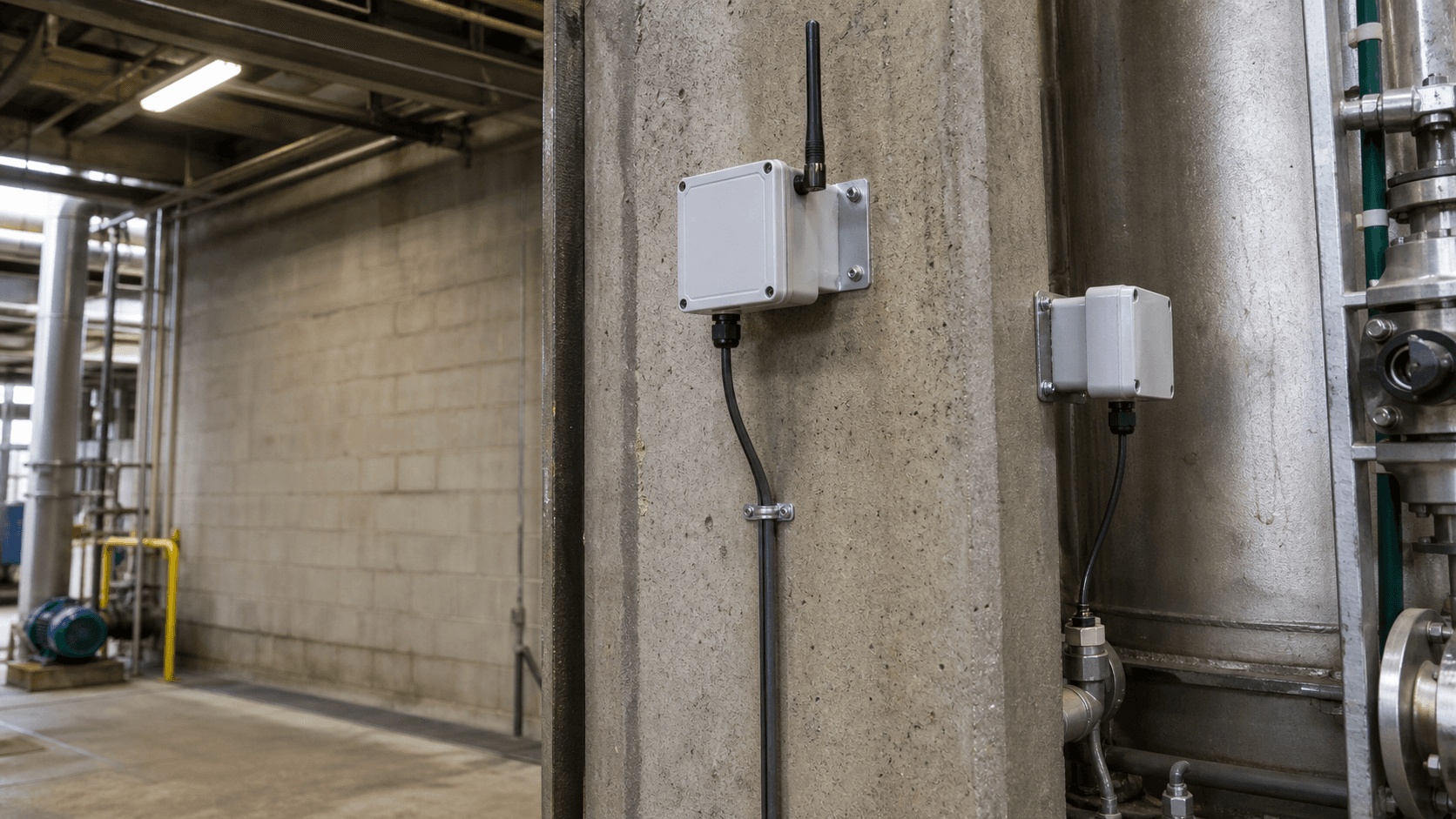
What Is LoRaWAN?
LoRaWAN is a Low Power Wide Area Network protocol for connecting devices that send relatively small amounts of data over long distances. LoRa is the radio modulation used on the link; LoRaWAN defines how end devices join a network, format and secure messages, share radio capacity, and communicate through gateways and network servers.
A LoRaWAN gateway is not paired with one sensor. It listens for transmissions from many devices in range and forwards what it hears. The same uplink may reach multiple gateways; the network server can remove duplicates and use the best available path. This star-of-stars architecture allows gateway coverage to be added without forcing each field device to learn a new route.
The protocol operates within regional radio rules, so frequency plans, permitted channels, duty-cycle limits, and transmit power must be selected for the country of deployment. A device built for one region should not be assumed compliant or interoperable in another.
How a LoRaWAN Message Reaches the Application
End device
A sensor, meter interface, tracker, button, or controller measures an event and sends a compact LoRaWAN message.
Gateway
One or more gateways receive LoRa radio packets and forward them over Ethernet, Wi-Fi, or cellular backhaul.
Network server
The network server authenticates traffic, removes duplicate receptions, manages data-rate behavior, and routes application payloads.
Application
An IoT platform decodes device data, stores telemetry, applies rules, and integrates events with dashboards and business systems.
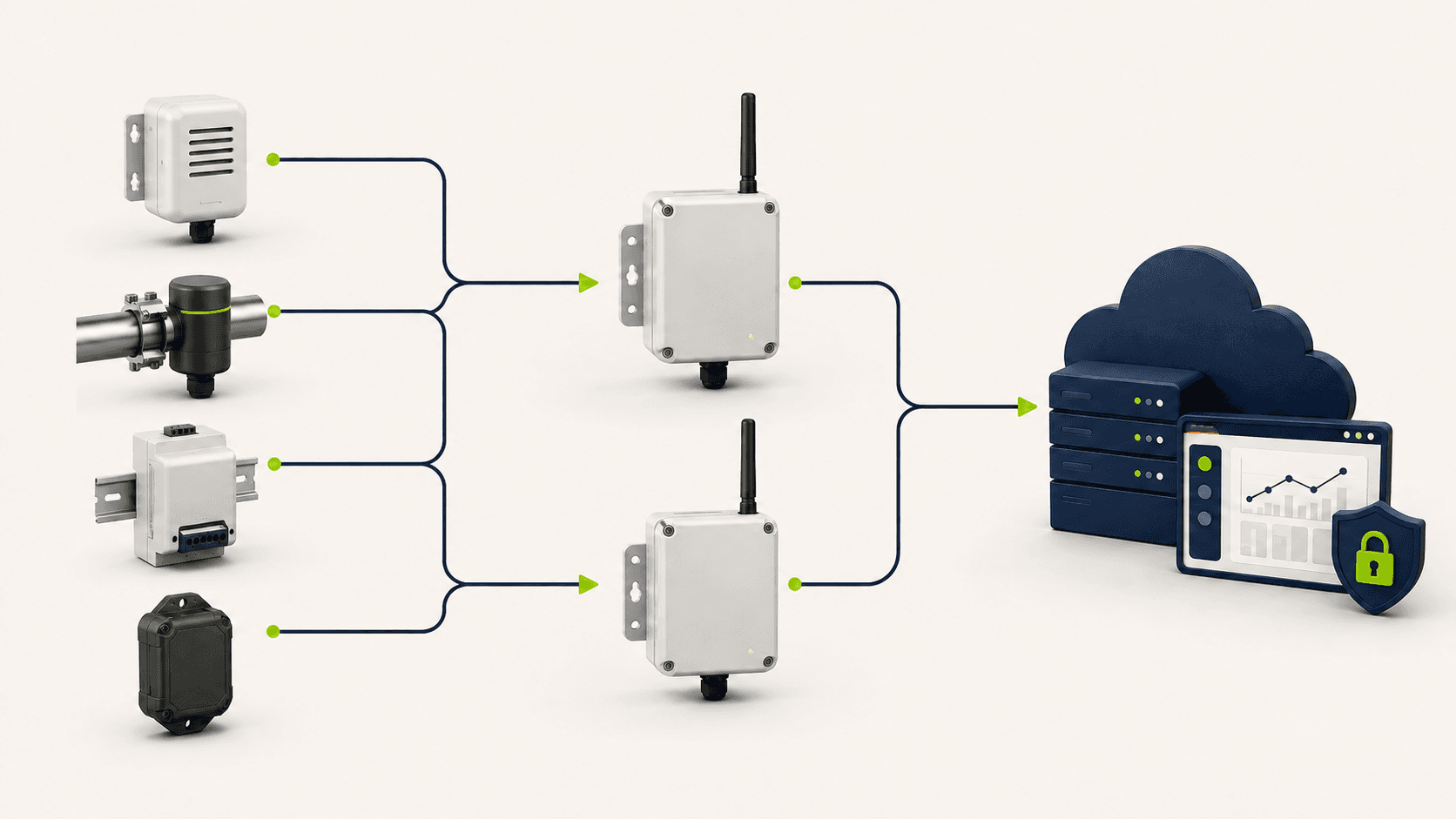
The LoRa Alliance describes LoRaWAN as an end-to-end LPWA architecture for secure, bidirectional IoT communication. See its LoRaWAN standards overview.
Device Classes: Choosing the Receive Behavior
Class A: lowest-power default
Every end device supports Class A. After it sends an uplink, it briefly opens receive windows for a possible downlink. The network cannot deliver an immediate command whenever it wants, but the device can sleep for most of its life. This is the normal fit for battery sensors and periodic status reports.
Class B: scheduled receive opportunities
Class B adds synchronized receive slots. It offers more predictable downlink timing than Class A while allowing substantial sleep time, at the cost of time synchronization and additional energy use.
Class C: lowest downlink latency
Class C devices keep their receiver open whenever they are not transmitting. Commands can arrive with less delay, but power consumption is much higher. This mode is normally reserved for mains-powered equipment or applications where command latency matters more than battery life.
Where LoRaWAN Fits—and Where It Does Not
LoRaWAN is a strong fit for telemetry that is small, periodic, or event-driven: a temperature reading, tank level, meter total, door state, alarm, position update, battery status, or maintenance request. It is useful when wiring is expensive, assets are distributed, and a sensor must spend most of its time asleep.
It is not a replacement for Ethernet, industrial fieldbuses, Wi-Fi, or deterministic control networks. Camera feeds, audio, large files, frequent high-rate waveforms, safety-critical closed-loop control, and sub-second command expectations are poor matches. Firmware updates are possible in defined architectures, but payload size, airtime, fragmentation, and fleet scheduling make them a deliberate engineering exercise rather than an everyday bulk-transfer channel.
| Technology | Coverage | Device power | Data profile | Typical fit |
|---|---|---|---|---|
| BLE | Short | Very low | Small | Tags, proximity, room or zone coverage |
| LoRaWAN | Long | Very low | Small and intermittent | Distributed sensors, meters, alarms, and trackers |
| Wi-Fi | Local | Moderate to high | Medium to high | Powered devices and higher-data local applications |
| Cellular | Wide-area operator coverage | Moderate to high | Medium | Mobile assets and remote sites without private gateways |
Industrial LoRaWAN Device Families
The radio is only one part of a useful product. Enclosure, antenna, sensor interface, power source, mounting, service access, firmware behavior, and the application payload must be designed around the operating environment.
Environmental nodes
Temperature, humidity, air quality, light, weather, and cold-chain monitoring
Condition-monitoring nodes
Vibration, runtime, contact, pressure, level, and equipment-state inputs
Meter and utility interfaces
Pulse counting, Modbus data acquisition, energy, water, gas, and remote meter readings
Location and logistics trackers
GNSS outdoors, BLE or Wi-Fi observations indoors, movement events, and geofence workflows
Buttons and safety devices
Assistance calls, maintenance requests, acknowledgement, and field-worker workflows
BLE-to-LoRaWAN bridges
Collect nearby BLE beacon or sensor data and forward selected events over a wider-area LoRaWAN link
Indoor and outdoor gateways
Backhaul for private sites, multi-building campuses, yards, farms, mines, and distributed infrastructure
Security and Fleet Operations
Secure deployment begins during manufacturing and provisioning. Each device needs a controlled identity and key lifecycle. Over-the-air activation should be preferred where the operational model supports it, and secrets must not be reused casually across a fleet. Network and application responsibilities should remain separated so infrastructure can route a message without exposing more payload data than required.
Operations also need visibility into last contact, signal conditions, battery estimates, firmware version, reset reason, configuration revision, and failed decoding. A silent device may indicate a depleted battery, damaged antenna, gateway outage, changed environment, or an application problem; the platform needs enough evidence to distinguish them.
Downlink capacity is limited and shared. Configuration changes should be versioned, acknowledged, and scheduled rather than repeatedly broadcast. For critical changes, staged rollout and post-change observation are safer than a fleet-wide update with no feedback loop.
A Complete VAUTN LoRaWAN Solution
VAUTN can provide application-specific electronics, sensor and interface selection, antenna and enclosure design, embedded firmware, gateways, manufacturing support, and deployment testing. This avoids treating the LoRaWAN module as the finished product when field reliability depends on the complete device.
VAUTN Cloud can connect the device layer to multi-tenant dashboards, APIs, webhooks, device health, and operational integrations. A LoRaWAN network server can remain a defined infrastructure component while the application layer presents consistent device and business events.
Where telemetry belongs to a managed asset, the same event can be associated with AssetOptima records for maintenance, inspection, movement, warranty, inventory, and lifecycle workflows. The goal is not simply to receive a packet; it is to make the packet useful.
Plan the Pilot Around Airtime and Evidence
Start with the measurement, reporting interval, alarm behavior, latency tolerance, and battery-maintenance target. Then perform a site survey using the intended antenna locations and representative device placement. Warehouses, tanks, concrete structures, machinery, terrain, and gateway height can change coverage substantially.
A useful pilot proves packet delivery across normal operating conditions, identifies coverage margins, measures energy consumption with the real firmware profile, validates offline and duplicate handling, and demonstrates that an event reaches the person or system responsible for acting on it.
Build the Device and the Data Path Together
Plan a LoRaWAN pilot covering hardware, firmware, gateways, cloud integration, and operational workflows.
Discuss Your LoRaWAN Applicationarrow_forward